
Christmas does not begin with lights, gifts, or celebrations. It begins with a divine decision: God chose to draw near. Not from power, not from distance, but from human fragility. The story of Jesus’ birth is not just an ancient account; it is a declaration of love that remains alive today, an invitation to see life from a different perspective.
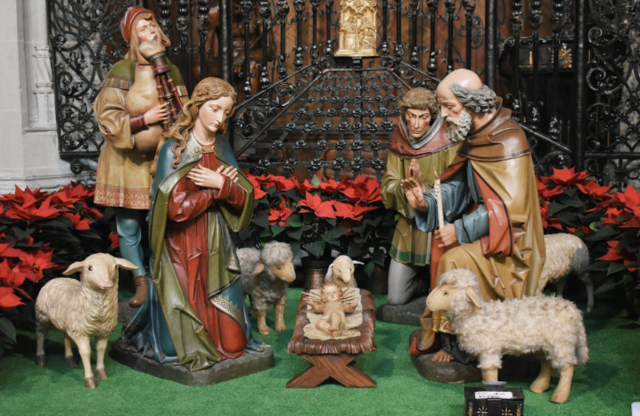
“But you, Bethlehem Ephrathah… out of you will come for me one who will be ruler over Israel.” Micah 5:2
Bethlehem was a small town, without prestige or political relevance. Yet it was the chosen place for the birth of the Savior. This was neither accidental nor improvised. It was the precise fulfillment of an ancient promise.
God shows us that His work does not depend on size or appearance. He transforms what is humble into something eternal. Bethlehem teaches us that no life is insignificant and that even the most modest beginnings can become the setting for something great.
Mary and Joseph arrived there weary, without comfort, without guarantees. Their journey was a test of faith and obedience. They did not understand everything, but they trusted. And that trust allowed the course of human history to change forever.
Jesus was not born surrounded by luxury, but in a manger. There were no decorations or applause—only the silent presence of God made a child. The greatness was not in the place, but in the One who had just entered the world.
This challenges the way we measure success and importance. Christmas reminds us that value is not found in outward things, but in love that is given freely. In a world obsessed with appearances, the manger remains a call to simplicity.

“The people walking in darkness have seen a great light.” Isaiah 9:2
The birth of Jesus brought light to a world marked by waiting and pain. It was not a decorative light, but a transforming one—a light that reveals, heals, and guides.
The first to receive the news were not kings or religious leaders, but shepherds—ordinary people, often overlooked. God chose to announce His arrival to those living everyday lives, reminding us that His grace does not depend on status or merit.
The song of the angels united heaven and earth. It was not only an announcement, but a lasting invitation to praise and hope. That light still shines today, especially in moments when darkness seems to prevail. Each Christmas reminds us that God did not reveal Himself where everyone expected. He did not choose palaces or impressive cities. He chose what was small, simple, and barely noticed. And there lies one of the first profound lessons of this season: what truly matters is often born in silence.
“When they saw the star, they rejoiced with exceedingly great joy.”Matthew 2:10
The star that guided the wise men represents more than a celestial phenomenon. It represents a sincere search for meaning. Those men traveled far, persevered, and did not stop until they found what their hearts longed for.
God continues to guide those who seek Him with honesty. Perhaps not with visible stars, but through signs, questions, and paths that lead to truth.
The gifts they offered—gold, frankincense, and myrrh—revealed who Jesus was: King, God, and Savior. But they also challenge us today. What do we offer Him? Not only at Christmas, but in our daily lives.

“And the Word became flesh and dwelt among us.” John 1:14
This is the heart of Christmas. God did not remain watching from a distance. He became flesh. He walked, felt, wept, and loved as we do. He shared our burdens in order to redeem us from within our own history.
The Incarnation is the ultimate proof of a love that does not flee from suffering, but passes through it in order to transform it.
Today, Christmas runs the risk of losing its meaning. Amid shopping, commitments, and noise, we forget the heart of this celebration. But the message remains unchanged: God loved us first.
Returning to the origin does not mean rejecting joy—it means giving it depth. Loving as Jesus loved, forgiving as He forgave, and being light for others is the truest way to live Christmas.
Christmas is not only a memory of the past. It is a present invitation. It calls us to look at our lives with renewed faith, to believe that light still overcomes darkness and that love still has the final word.
May this season not pass without touching us inwardly. May the birth of Jesus not be just a familiar story, but a lived truth. Because when God is born in the heart, everything can begin again.